You’re invited to level up your classroom with the brand new Google AI Educator Series! Whether you’re looking for AI Foundations, 15-minute K-12 Spotlights on literacy and college prep, or Higher Ed deep dives into research and syllabus refreshing, this series offers a unique path to help every educator master the future of learning. Spend the summer growing your Googleyness by earning the first half of the set with more to be released on September 2. Continue Reading...
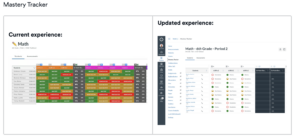
Accessibility is an increasingly important priority for districts as they navigate compliance requirements, procurement reviews, and inclusive instructional practices. Starting July 1, 2026 you will see the feature on your Mastery and Canvas integration.
As we move into the final stretch of the school year, our focus shifts toward empowering students to take ownership of their growth. This month, we are highlighting the Resilient Lifelong Learner — a Resilient Lifelong Learner isn’t just someone who gets the right answer; they are students who embrace challenges, learn from setbacks, and remain curious in an ever-changing world. To support this mindset, we are thrilled to spotlight a new feature in Adobe Express.
Adobe Express has just released a new beta feature designed to bridge the gap between curriculum standards and creative student output. Teachers can now generate high-quality, engaging classroom activities in a matter of seconds.
How it works:
Input Your Goal: Simply type in a specific topic (e.g., "The Water Cycle"), a learning objective, or a state standard.
Instant Generation: The AI engine builds a complete classroom activity tailored to your prompt.
Student-Ready Instructions: It doesn't just create the "what"—it creates the "how," providing clear, step-by-step instructions for students to follow.
Teacher Refinement: Once the materials and instructions have been generated, teachers can change any part of the template or instructions to fine-tune it for your classroom before sharing it with students.
By automating the initial scaffolding, teachers can spend more time facilitating "productive struggle." Students get clear guardrails that allow them to experiment, fail safely, and iterate on their creative projects—the very heart of being a resilient learner.
Log in to your district Adobe Express account and look for the "Generate Activities" box under the “Teach” tab. Give it a standard you’re teaching next week and watch the magic happen.